
Wrinkles, acne scars, sun damage, and rough texture can affect several layers of the skin, making surface-level treatments feel insufficient. Solaria is a fractional CO2 laser designed for more intensive skin resurfacing and facial rejuvenation. By creating precise treatment zones within damaged skin, it supports the removal of older surface cells while stimulating collagen remodeling beneath them.
Seema’s Botox and Aesthetics offers customized Solaria treatments under the leadership of Seema Francis, RN, BSN, AAPN. Her more than ten years of nursing experience, background in infection control, and advanced medical aesthetics training help guide the practice’s approach to laser care. Treatment depth, recovery expectations, and aftercare are carefully considered so each client receives a plan suited to their complexion, concerns, and desired degree of improvement.
What Is Solaria?
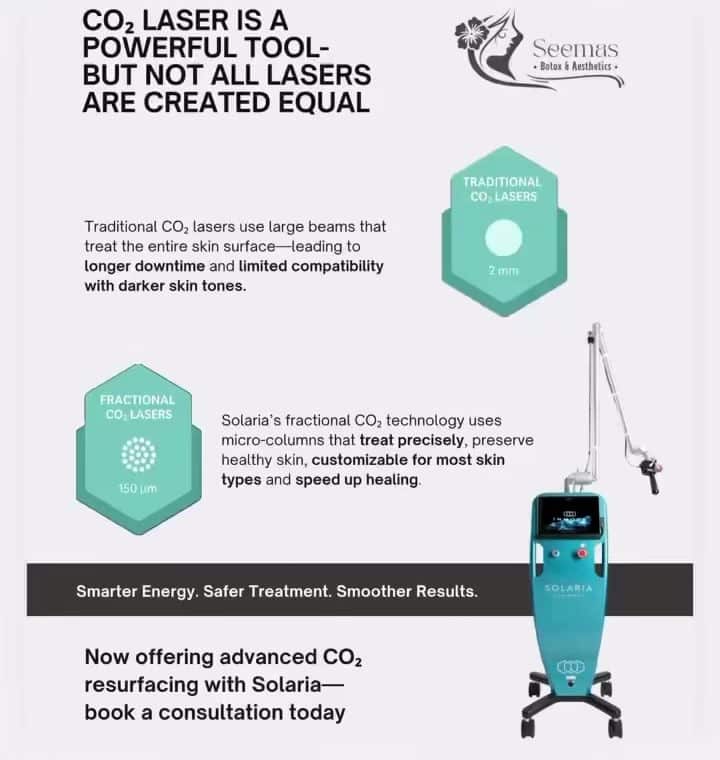
Solaria by InMode is a fractional CO2 laser resurfacing system. Carbon dioxide laser energy is delivered to the skin through small, controlled treatment columns rather than uniformly removing the entire surface. Untreated tissue remains between these columns, supporting the healing process while treated areas begin to renew.
The laser targets damaged surface cells and delivers controlled heat to deeper tissue, stimulating a repair response and new collagen production. This combination can improve both visible surface concerns and some of the structural changes that contribute to aging skin.
Solaria is included within InMode’s portfolio of advanced aesthetic workstations and technologies.
What Can Solaria Improve?
Solaria may be considered for clients with more noticeable signs of aging, scarring, or sun damage. Depending on treatment depth and individual skin needs, it may help improve:
-
Fine lines and deeper wrinkles
-
Acne scars
-
Certain surgical or traumatic scars
-
Uneven or rough texture
-
Sun-related pigmentation
-
Enlarged-looking pores
-
Dull or damaged skin
-
Crepey texture and mild laxity
Common treatment areas include the face, neck, chest, and hands. However, settings and recovery can differ significantly across areas because skin thickness and sensitivity vary throughout the body.
How Does Fractional CO2 Resurfacing Work?
The Solaria laser creates microscopic channels in the skin using focused CO2 energy. Damaged tissue within those columns is removed or coagulated, prompting the body to replace it with healthier tissue as healing progresses.
Heat delivered around the treatment columns also supports collagen contraction and longer-term remodeling. This means some improvements become visible after the skin heals, while firmness and texture may continue changing over the following months.
Treatment intensity can be adjusted. A lighter session may focus on tone and early texture changes with a shorter recovery, while deeper resurfacing may be selected for pronounced wrinkles or scars and generally involves more downtime.
What Happens During A Solaria Appointment?
Before treatment, the team evaluates the client’s skin tone, pigmentation history, medical conditions, medications, previous resurfacing procedures, and tendency to scar. Recent sun exposure and current skincare products are also reviewed.
A topical numbing product is generally applied before the laser procedure. Additional comfort measures may be used based on the depth of treatment. During the session, the handpiece is moved systematically across the selected area while delivering fractional laser energy.
Clients may feel warmth, stinging, or a prickling sensation. Appointment length depends on the area and treatment intensity. Afterward, the skin is protected with products selected to support early healing.
What Is Recovery Like?
Recovery is more involved than with treatments such as IPL or light chemical peels. Redness, swelling, warmth, peeling, crusting, or sensitivity may occur as the skin heals. The treated area may initially resemble a strong sunburn before gradually flaking and revealing renewed skin.
Several days of visible recovery should be expected, although deeper treatments can require longer. Some practices report approximately one to two weeks of social downtime depending on the settings used and the individual healing response.
Clients should follow all instructions for cleansing, moisturizing, sun protection, and avoiding active skincare. Picking at peeling or crusted skin can increase the risk of infection, scarring, and discoloration.
Why Choose Seema’s Botox And Aesthetics For Solaria?
Fractional CO2 resurfacing requires careful control of treatment depth, energy, coverage, and post-procedure care. Seema Francis brings experience in nursing leadership, clinical documentation, healthcare technology, and infection control to the practice’s aesthetic services. She also completed specialized training in integrative medical aesthetics and holds board certification through the American Academy of Procedural Medicine Aesthetics.
Under Seema’s guidance, the team evaluates the entire skin history before recommending Solaria. Pigmentation risk, scar depth, sensitivity, sun exposure, and available recovery time are considered when selecting treatment settings. This individualized process helps clients avoid unnecessarily aggressive resurfacing while still pursuing meaningful improvements. Detailed preparation and aftercare support remain central to promoting safe healing and a smoother, more even result.
Renew Damaged Skin With Solaria In Springfield, PA
Solaria provides fractional CO2 laser resurfacing for clients seeking improvements in wrinkles, scarring, pigmentation, and skin texture. Seema’s Botox and Aesthetics develops personalized laser plans in Springfield, PA, based on treatment goals and recovery needs. Call (610) 552-0012 to schedule a consultation and determine whether Solaria is the right level of skin rejuvenation for you.